Pigeon Deterrents Under Scrutiny
Dead Pigeons Found in Platform Roof at Zurich HB
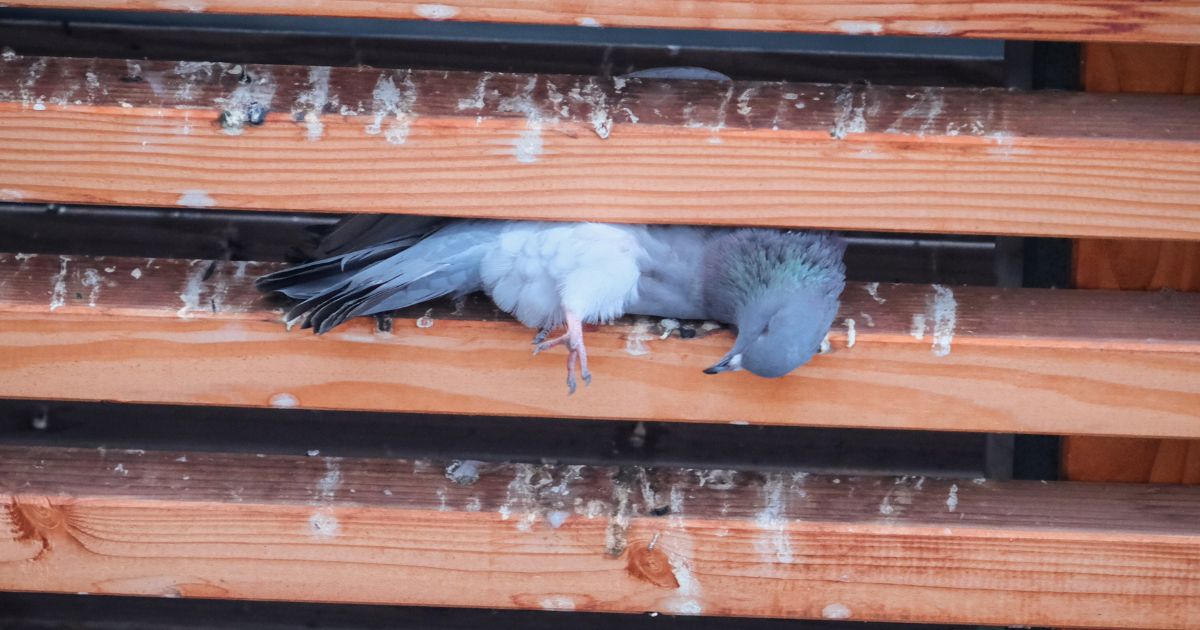
In December 2025, a disturbing discovery at Zurich Main Station attracted widespread attention. At the Europaallee exit, directly above platforms 3 and 4, several dead pigeons were found protruding from a wooden ceiling structure. What initially appeared to be an isolated and distressing sight quickly became a widely reported case – and further evidence of why we launched the #GemeinsamDokumentieren campaign in October 2025.
The Discovery
A commuter discovered the dead birds while waiting at the station before visiting a Christmas market. She told Nau.ch that several pigeons were protruding from the platform roof and appeared to have been dead for some time. We had already received the first images of pigeons trapped in the structure on 1 December; two days later, further birds were discovered in the same wooden structure.
We shared the commuter’s photos and videos on Instagram and put a direct question to SBB: How many more animals would have to fall victim to the structure before something changed? As Watson reported, a closer inspection revealed an even more disturbing picture: at least four dead pigeons were trapped in the wooden ceiling.
Why the Structure Becomes a Trap
We believe the pigeons use the area above the wooden structure as a sheltered place to rest and breed, but can become trapped between the wooden slats and die there, as reported by the Tages-Anzeiger, among others. This assessment is also supported by animal welfare experts. Nadja Brodmann, Managing Director of Zürcher Tierschutz, told Watson that the explanation was plausible, as pigeons naturally seek out niches and crevices for shelter and nesting. At the same time, she noted that the birds could theoretically have died from other causes and that becoming trapped was not necessarily the direct cause of death.
20 Minuten also covered the case, while we explicitly described the structure to Watson as a “death trap”. TeleZüri reported on the incident as well, describing how pigeons repeatedly became trapped in the wooden roof structure, prompting concern among animal welfare advocates and calls for action.
SBB’s Response
SBB initially played down the extent of the problem. Speaking to Watson and 20 Minuten, spokesperson Moritz Weisskopf said that, based on their information, these were isolated incidents caused by pigeons unintentionally entering difficult-to-access areas and becoming caught in deterrent netting. SBB said they would review the situation and adapt the installations if animals were being harmed. At the same time, they stressed that pigeon deterrent measures were necessary at busy railway stations to reduce health risks and damage to buildings, while maintaining that animal welfare requirements were taken into account.
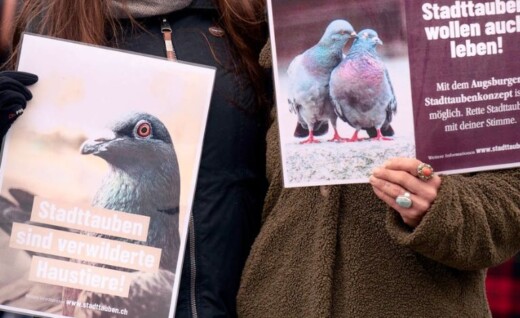
This response reflects a pattern we had already observed in September 2025. At the time, an SBB Reel published as part of a public-transport etiquette series drew criticism for portraying pigeon feeding in broadly negative terms and concluding with a reference to the “balance of nature”. We pointed out that urban pigeons are not native wild birds but the descendants of domesticated pigeons, meaning that their situation cannot simply be equated with the natural balance of a wild animal population. The post was removed from SBB’s channel shortly afterwards – a sign that public education can make a difference, but also that there is still a need for a broader conversation about how urban pigeons are treated.
What We Are Calling For
Beyond the specific case at Zurich Main Station, we used the attention surrounding the incident to raise broader concerns with SBB. As Nau.ch reported, we are calling for managed pigeon lofts and the immediate removal of improperly installed or damaged deterrent systems, such as sharp spikes or defective netting. Such installations can endanger animals and therefore violate animal welfare legislation.
This is precisely why we launched the #GemeinsamDokumentieren campaign in October 2025. The Europaallee case illustrates what the campaign is about: physical structures – whether designed as pigeon deterrents or not – can become a serious hazard to the birds under real-world conditions, particularly when they have no suitable alternatives.
A single incident like this tells us little about whether there is a wider problem. But when cases are systematically documented with the location, date and photographic evidence, recurring hazards such as the wooden structure at Europaallee can be identified and raised directly with SBB.
Conclusion
Five different media outlets – Nau.ch, Watson, 20 Minuten, Tages-Anzeiger and TeleZüri – covered the case at Zurich Main Station, helping bring the issue to wider public attention. Whether SBB will follow through on their announced review of the installations remains to be seen. Until then, our documentation work remains all the more important.
Found a dead pigeon at a Swiss railway station? Help us document it: #GemeinsamDokumentieren. Send us the location, date and photos or videos here.
Live pigeon trapped or unable to get out? This is an emergency. Contact the police (117) or fire service (118). On SBB premises, also contact the Transport Police (0800 117 117). For advice, call the Animal Rescue Service (0800 211 222).