Urban Pigeon Management in Switzerland
Pigeons: From Unsatisfactory Practices to New Approaches
Urban pigeons are a familiar sight in Swiss cities. Whether at Bellevue in Zurich, around the railway station in Basel or in Lausanne’s old town, the birds are part of the urban landscape. Some see them as symbols of peace, vitality and city life; others dismiss them as “rats with wings” and a constant nuisance. What is clear is that the measures used to date have achieved only limited success.
The Situation in Switzerland: Considerable Effort, Limited Results
For decades, Swiss cities have tried to reduce their urban pigeon populations. The most common measures include feeding bans, often combined with deterrents such as spikes and netting, and the regular removal of nests. However, all of these approaches have limitations:
- Feeding bans have limited effectiveness in practice, as they are frequently ignored and pigeons continue to be fed.
- Deterrent measures often simply displace pigeons from one building to another.
- Nest removal provides only temporary relief and can lead to renewed breeding activity.
The result is an unsatisfactory status quo: large groups of pigeons in public spaces, soiling and damage to buildings, and birds in poor health remain common in many places. The pressure to act is therefore considerable, yet there is still a lack of consistent, long-term strategies that take into account both animal welfare and the needs of local communities.
The Augsburg Model: A Proven Approach
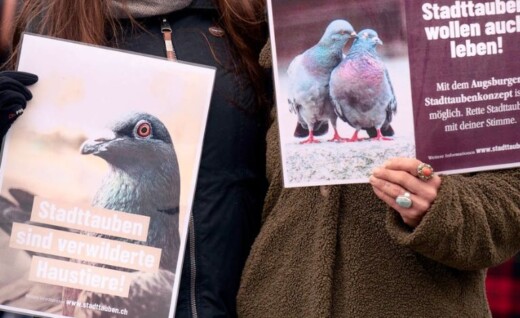
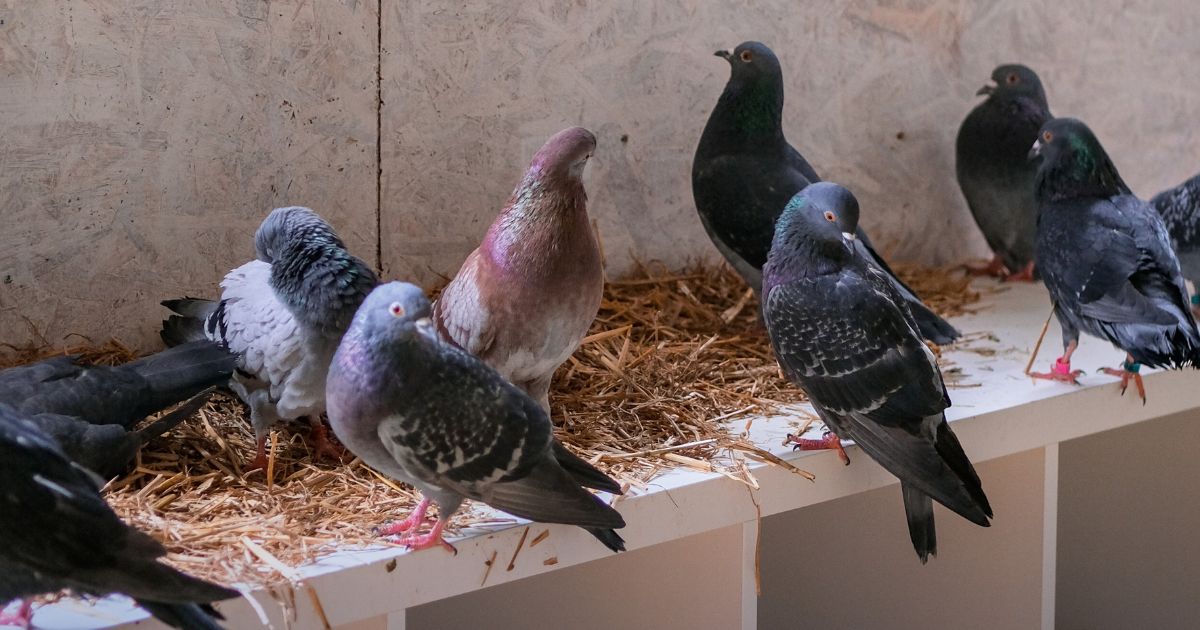
Looking beyond Switzerland shows that another approach is possible. Around 20 years ago, the Bavarian city of Augsburg introduced what is now known as the Augsburg Model. At its heart are managed pigeon lofts where the birds are provided with suitable food and care. The pigeons lay their eggs in the lofts, where they can easily be swapped for dummy eggs.
The approach has produced measurable results:
- Urban pigeon populations can be reduced over time.
- Soiling of buildings and public spaces can be significantly reduced.
- Controlled feeding and appropriate care can improve the health of the pigeons.
A crucial factor is the continuous management of the lofts by animal welfare organisations, municipal authorities and volunteers. The Augsburg Model is not simply about providing pigeon lofts: it depends on regular care, monitoring, documentation and the long-term commitment of everyone involved.
The model has since been adopted by numerous other German cities and is widely regarded as an example of an approach that combines effective urban pigeon management with animal welfare.
Mobile Pigeon Lofts: A Flexible Alternative
Alongside traditional implementations of the Augsburg Model, more flexible alternatives have also emerged in Germany. One example is the container-based mobile pigeon loft developed by taubenloft.de. Shipping containers are converted into fully equipped managed pigeon lofts.
Their main advantage is flexibility:
- Flexible siting: Containers can be placed where no suitable building is available for conversion into a pigeon loft.
- Mobility: The loft can be relocated if circumstances at a site change.
- Durability: The robust construction is designed for long-term use and exposure to the elements.
- Predictable costs: Costs can be estimated more easily in advance than with complex construction projects.
Experience in Braunschweig, Lüneburg and other cities suggests that container-based pigeon lofts can be particularly interesting for municipalities that need a relatively quick solution or want to test the approach as a pilot project before committing to a permanent location. They can also be an option for smaller municipalities with limited infrastructure.
Different Formats, the Same Principle
Despite their differences, traditional managed pigeon lofts and container-based solutions share the same fundamental principle: management rather than deterrence.
Instead of continually displacing the birds, they provide a designated place where pigeons can settle, feed and breed. This makes their clutches accessible for regular egg swapping and enables their population to be managed humanely over time.
This differs fundamentally from approaches that rely primarily on bans and deterrence. The shift is from isolated, short-term measures towards structured, long-term urban pigeon management.
What Switzerland Can Learn
Swiss cities face many of the same challenges as cities such as Augsburg, Frankfurt and Cologne, but sustainable management approaches are still being introduced only gradually. Clear political commitment and close cooperation with animal welfare organisations are essential for long-term success.
- The Augsburg Model with permanent managed pigeon lofts offers an established long-term approach with fixed locations and clearly defined management.
- Container-based pigeon lofts provide greater flexibility, allowing municipalities to test locations, respond to changing circumstances and begin with a more adaptable solution.
In cities where suitable buildings or sites for permanent pigeon lofts are difficult to find, mobile lofts can help bridge the gap. In heavily visited cities such as Lucerne or Geneva, for example, a mobile pilot project could provide an opportunity to test suitable locations and evaluate the results before establishing permanent infrastructure.
Conclusion: A New Approach to Urban Pigeon Management in Switzerland
Current approaches to urban pigeons in many Swiss city centres remain unsatisfactory for both local communities and animal welfare. Feeding bans, deterrents and isolated measures have not provided a sustainable solution.
Experience from Germany shows that other approaches are available: the Augsburg Model with managed pigeon lofts and flexible container-based solutions such as those developed by taubenloft.de. While the formats differ, both are based on the same principle: humane, structured management rather than continual displacement.
If Swiss cities are willing to implement such approaches consistently, a long-standing source of conflict can become an opportunity to improve conditions for both people and pigeons – with cleaner public spaces, healthier birds and more peaceful coexistence.

Our comprehensive guide is based on the Augsburg Model and shows how managed pigeon lofts can be implemented efficiently and humanely in Switzerland.