Managed Pigeon Lofts
Success Stories from Switzerland and Germany
Managed pigeon lofts have already proven successful in numerous cities. Examples from Switzerland and Germany show how urban pigeon populations can be managed humanely and sustainably through controlled feeding and egg swapping.
Winterthur: The Augsburg Model in Switzerland
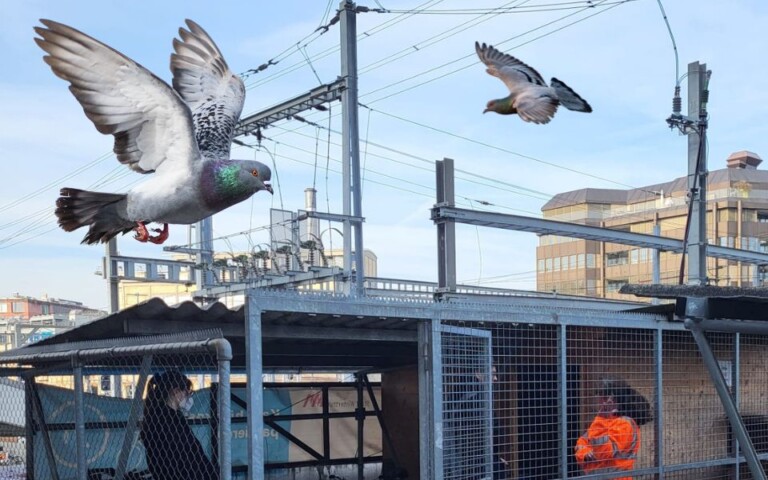
Winterthur demonstrates that the Augsburg Model also works under Swiss conditions. The city operates two managed pigeon lofts near the railway station, where the birds are provided with suitable food and their clutches are regularly monitored. In 2024 alone, according to a report by the Neue Zürcher Zeitung, more than 300 eggs were swapped for dummy eggs. Controlled feeding encourages the pigeons to remain close to the lofts, improves their health and ensures that a large proportion of their droppings is deposited there rather than in public spaces. It is also noteworthy that, despite the cantonal feeding ban, the city was granted an exemption allowing pigeons to be fed inside the lofts.
For years, Winterthur has demonstrated that animal welfare, population management and cleaner public spaces can go hand in hand.
Bern: Long-Term Pigeon Management Delivers Results
Bern has had a municipally organised pigeon management programme for many years. Today, eight managed pigeon lofts are operated, where the birds are provided with controlled feeding and veterinary care, and their clutches are regularly monitored. The development of the population is remarkable: according to the animal park, more than 10,000 urban pigeons lived in Bern during the 1980s and 1990s, while the population has remained stable at between 1,000 and 1,500 birds since 2012. Bern therefore provides an impressive example of what long-term municipal responsibility and managed pigeon lofts can achieve.
However, the city takes its own approach to population management: in addition to egg swapping, it relies particularly on the surgical sterilisation of male pigeons.
Germany: Nationwide Survey Shows Positive Results
A survey by Menschen für Tierrechte, based on data from 71 German cities, shows that managed pigeon lofts can also work effectively in practice. The majority of respondents from cities with such projects rated them as successful, and the situation at numerous pigeon hotspots was improved. The impact is particularly evident in Augsburg: at the time of the survey, around 63% of the city’s pigeon population was housed in twelve managed lofts, thousands of eggs were swapped each year, and around five tonnes of droppings were removed from the lofts in a controlled manner.
Experience from Germany also highlights what is needed for success: suitable locations, a sufficient number of pigeon lofts, consistent egg swapping, and reliable municipal management and funding.
Overall Concept Switzerland

Our comprehensive guide is based on the Augsburg Model and shows how managed pigeon lofts can be implemented efficiently and humanely in Switzerland.